A water security pond is a purpose-built reservoir designed to store rainwater and surface runoff for drought-proofing, irrigation, and fire suppression. This 2.8 million litre pond on Vancouver Island was built by Swell Farms with a four-ring concrete well-ring draw system, a crushed-rock keyway for water filtration, and 100% on-site material reuse. The pond provides multi-year irrigation reserve plus year-round fire suppression access for a rural coastal BC property.
The problem
Most acreage on Vancouver Island runs into the same water story. Wells slow down in August. Creeks that ran year-round a decade ago now go seasonal. Irrigation dries up right when it matters most. Fire risk climbs every summer and the nearest hydrant is kilometres away.
The conventional fixes don't solve the underlying problem. Drilling deeper chases a declining aquifer. Trucking in water costs money every time. Hoping for rain is not a plan. The property needs stored water -- enough to irrigate through the dry months, supply a fire crew if it comes to that, and buffer against the years when summer lasts longer than the well does.
The build
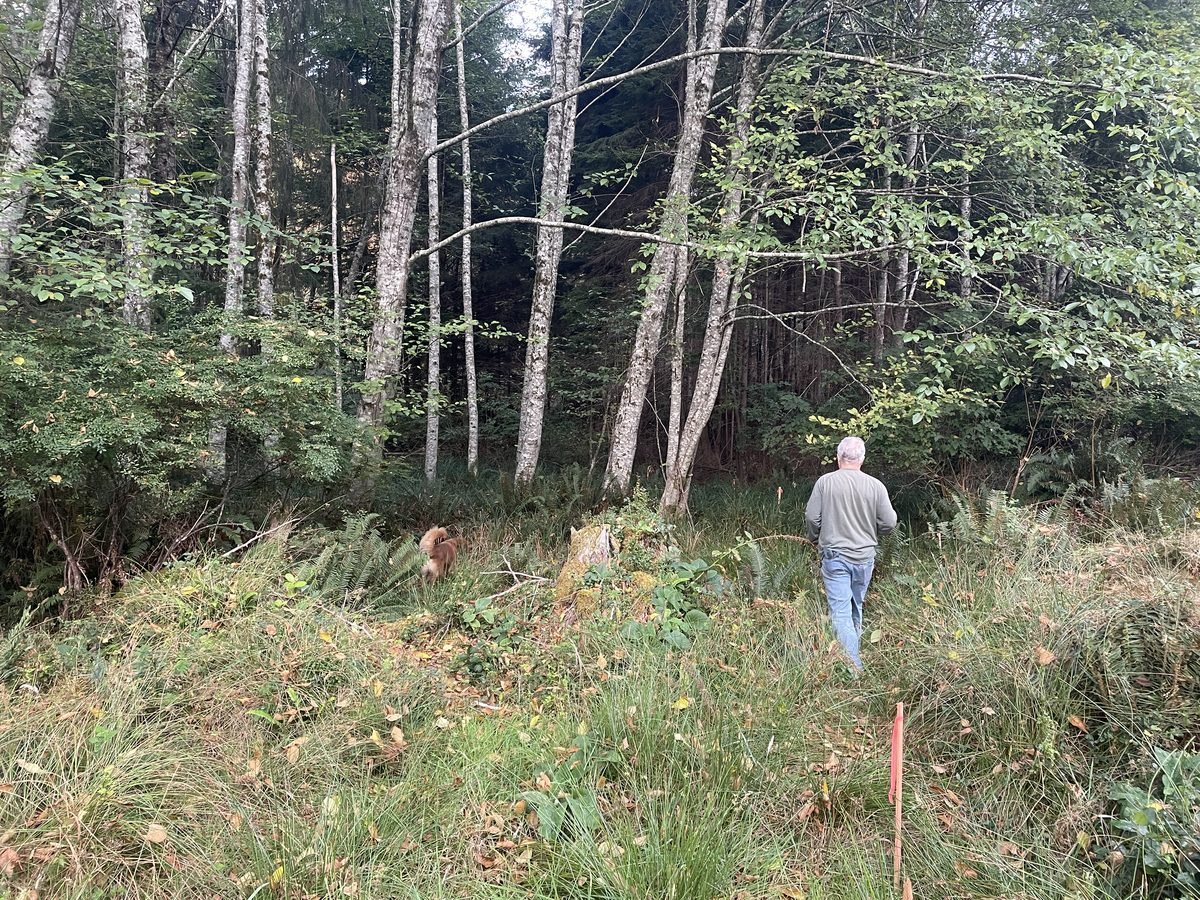
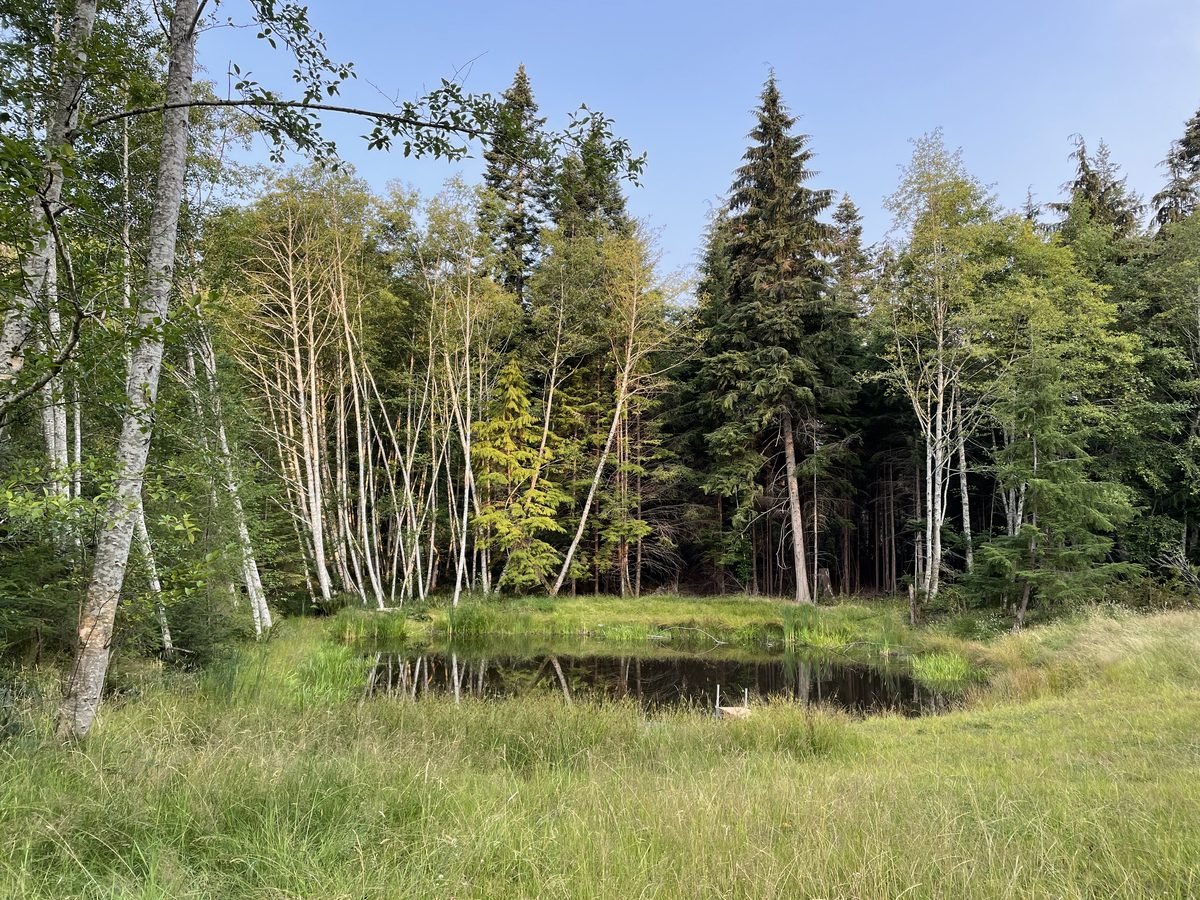
The pond was sized and shaped for water security, not aesthetics. A 100 by 100 foot footprint at full pool, 18 to 20 feet deep, with 2:1 side slopes and a roughly 40 by 40 foot working bottom.
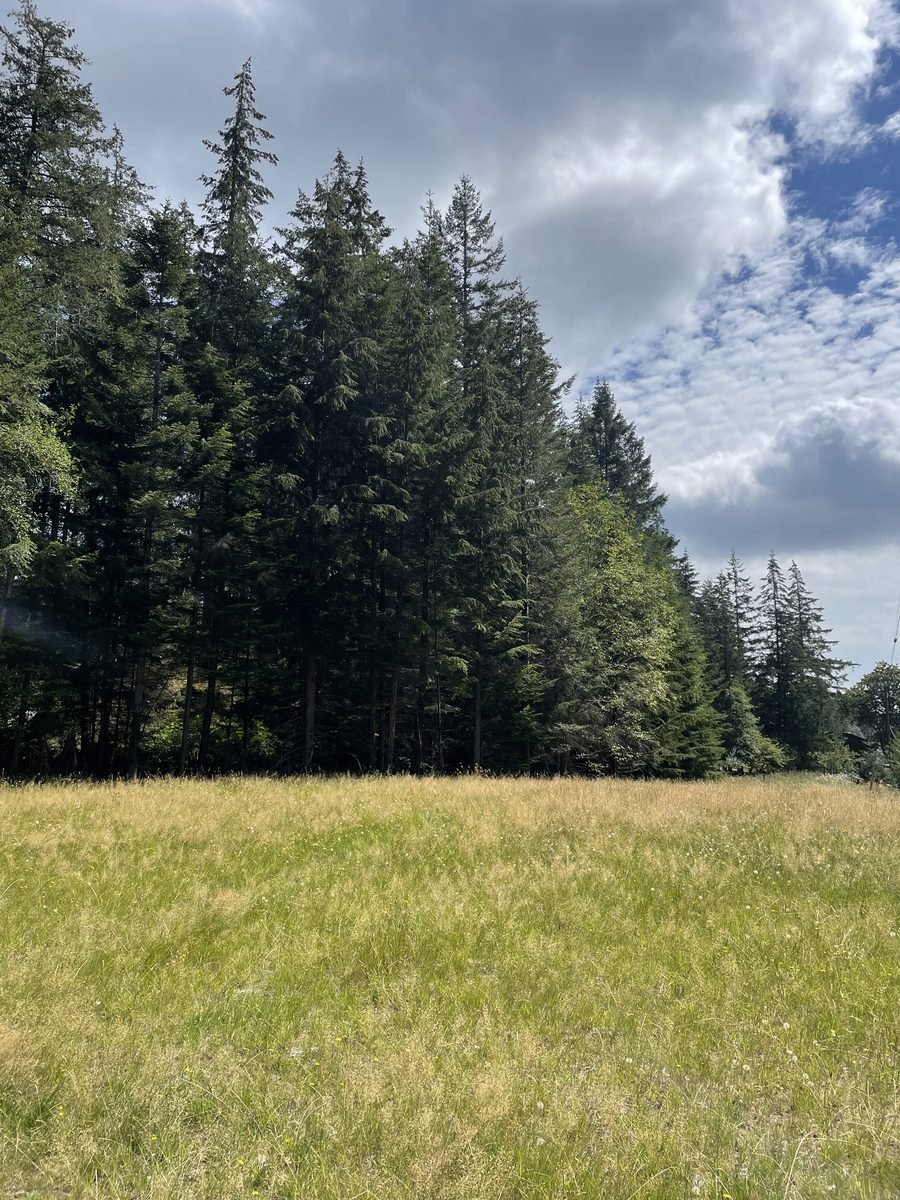
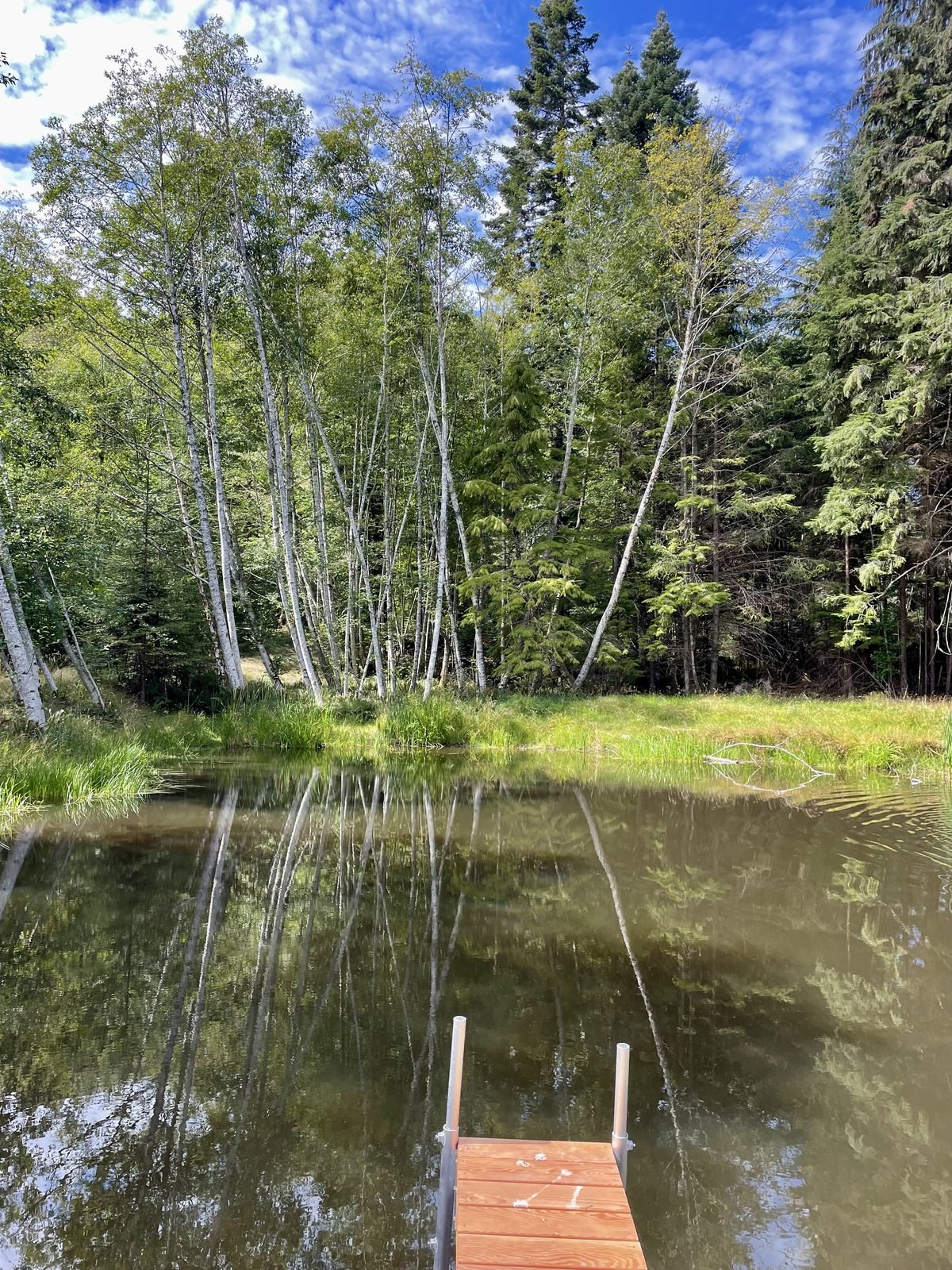
What separates this build from a hole in the ground is what happened to every cubic metre of material that came out of it. The topsoil was stripped first and stockpiled. The mineral soil and subsoil that came out underneath was placed strategically across the property -- not trucked away, not piled at the edge of the dig, but spread into low-lying areas and used to build up the contours that feed the pond. The land around the pond was reshaped at the same time the pond itself was being shaped. Everything got capped back with the saved topsoil and planted with native coastal grasses. Reeds and cattails went into the shallows for water filtration and habitat.
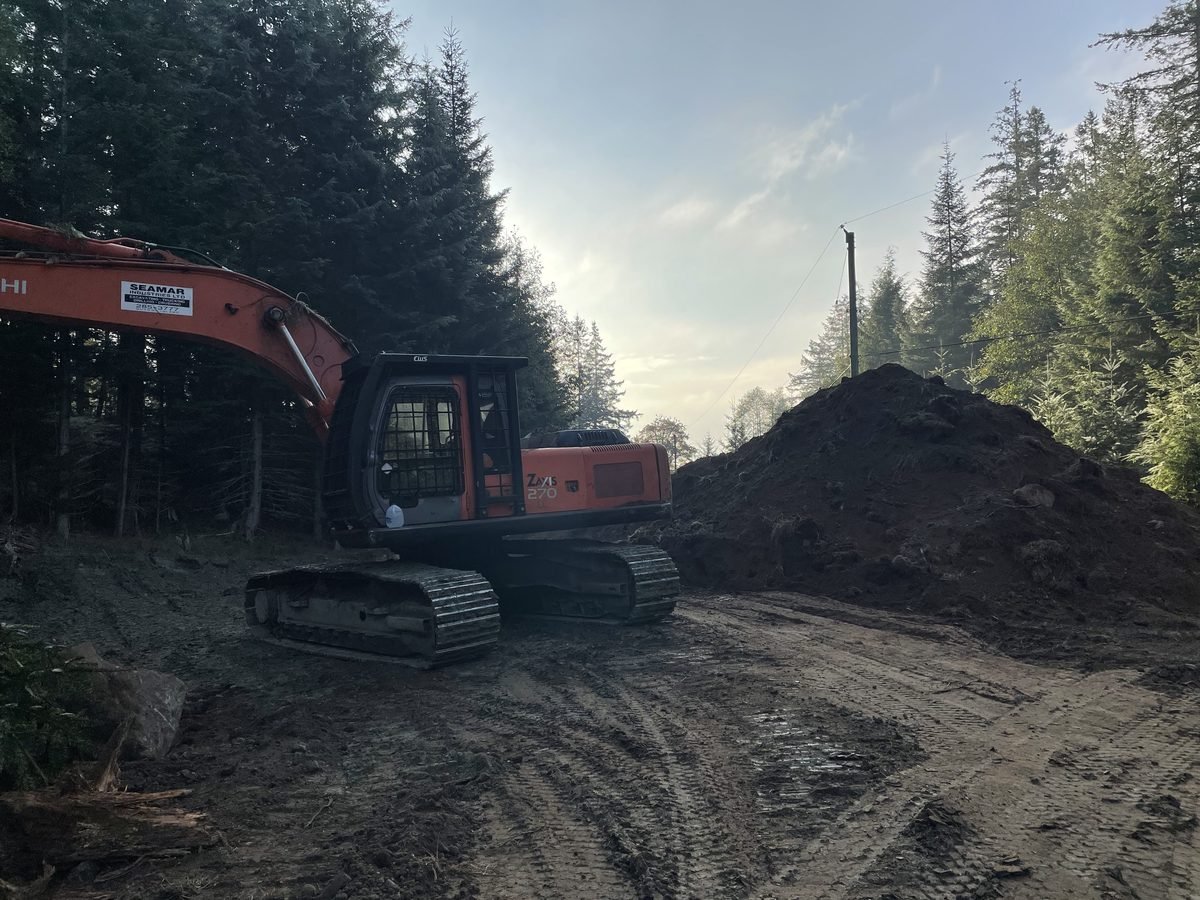
Nothing left the site. The excavation became the land-shaping at the same time. That's the difference between digging a pond and designing a water system into a property.
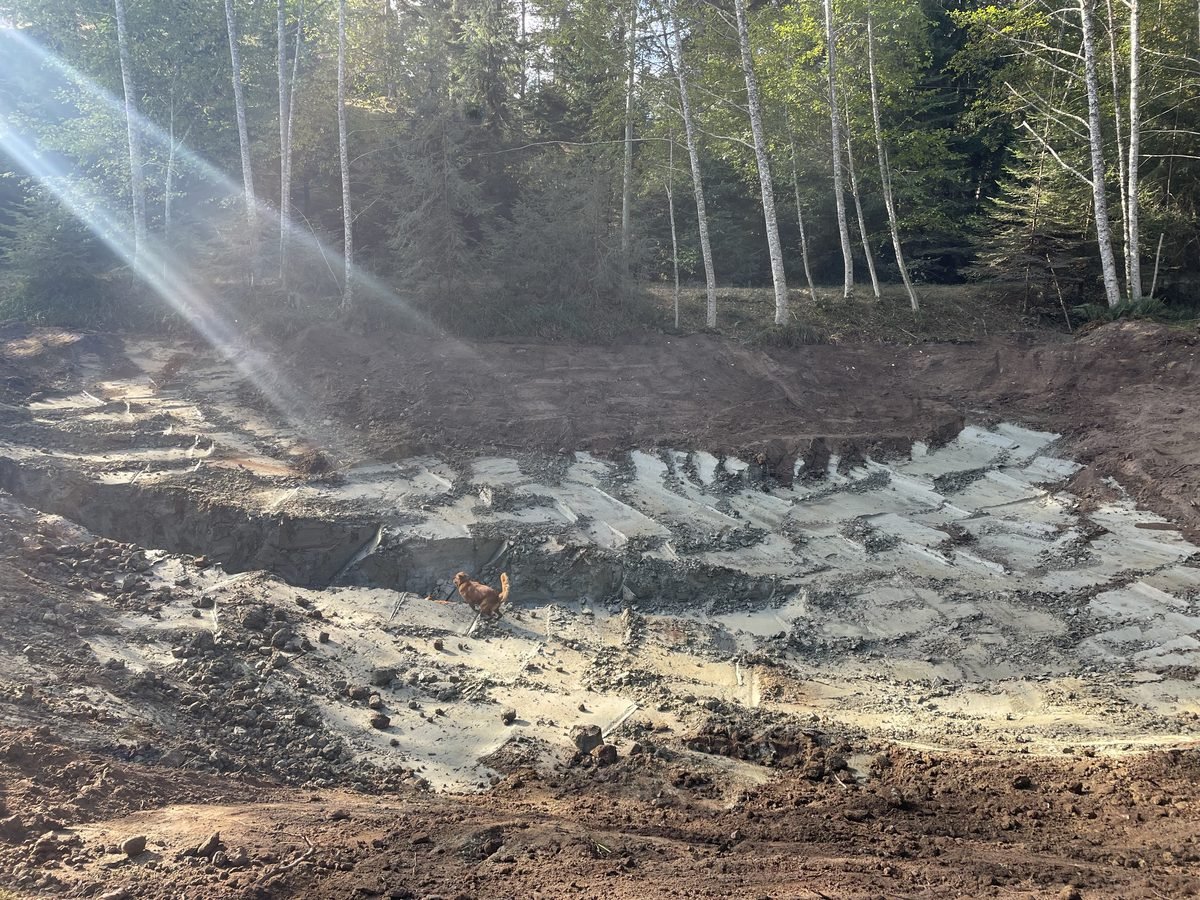
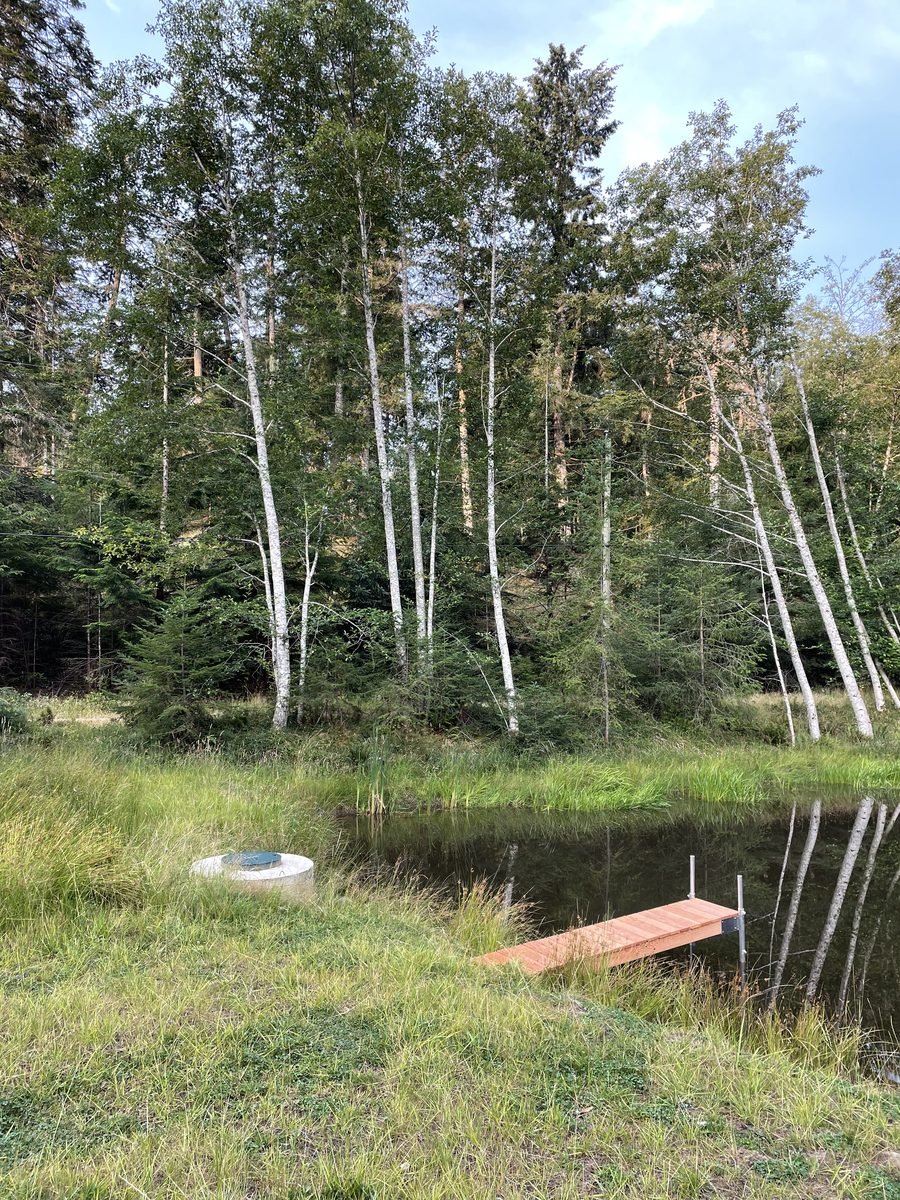
At the lowest point of the pond sits the part of the build that does the real work. A keyway runs along the deepest section -- a sub-grade trench packed with crushed rock that acts as a settling basin and pre-filter. Above it, four concrete well rings stand in line, sitting on a crushed rock base. The rings store clean, easy-to-access water for irrigation and fire suppression -- separated from the open pond water by the crushed rock filter and the depth of the keyway itself.
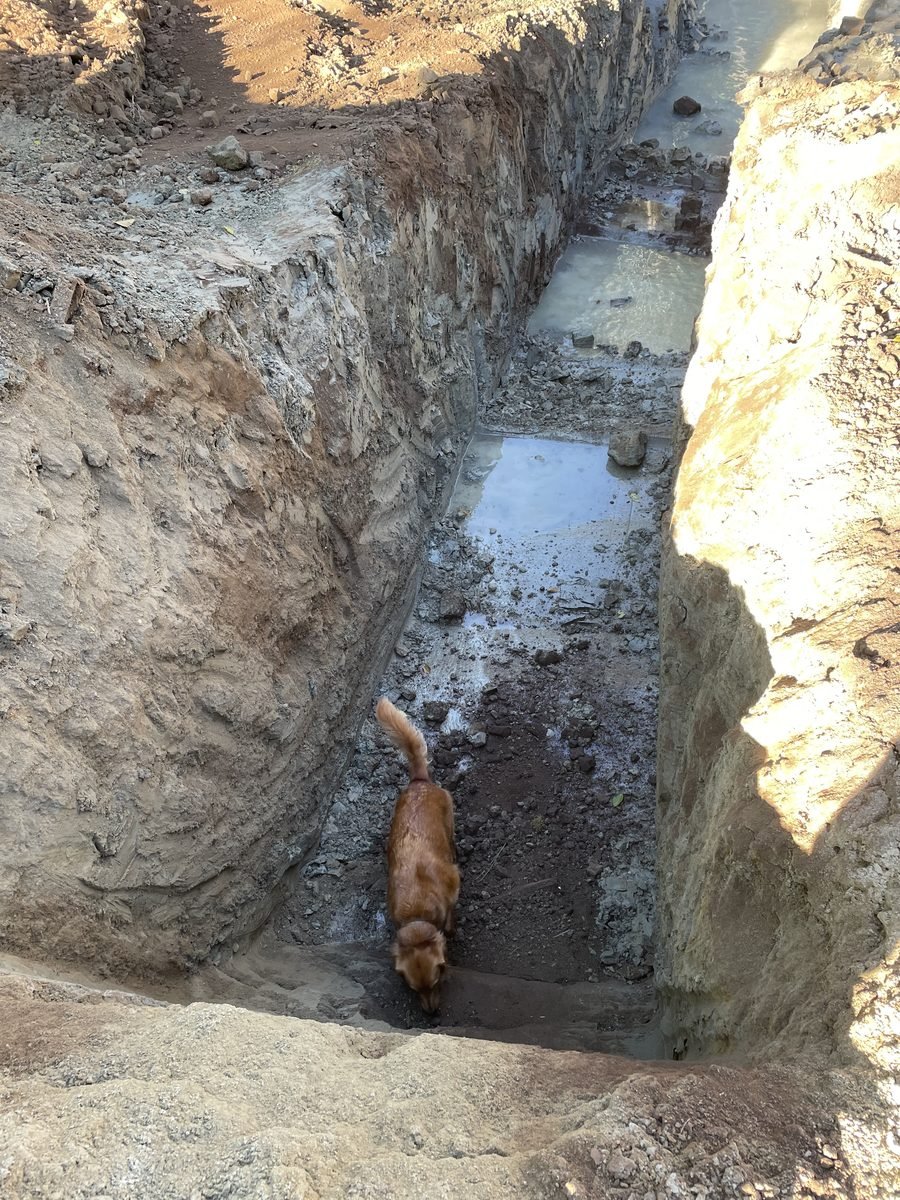
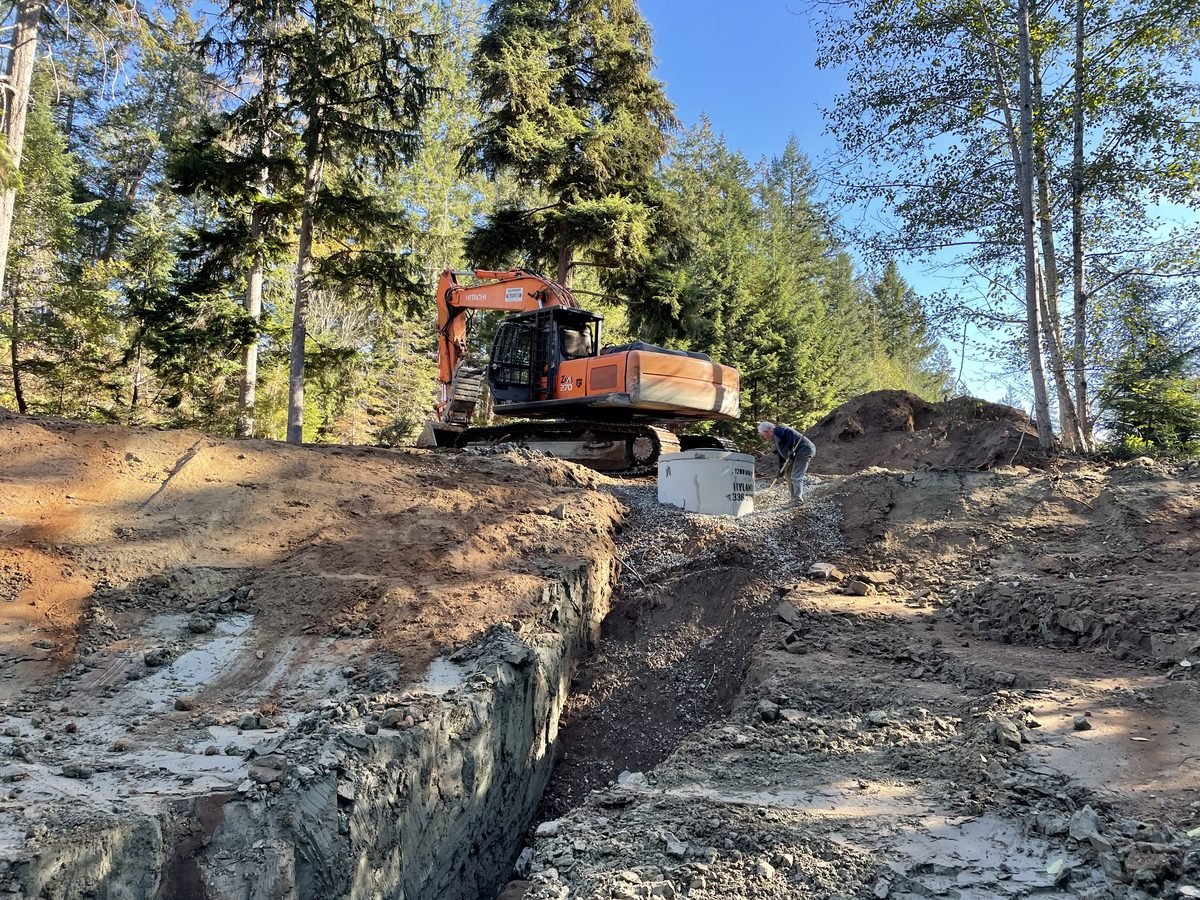
The result is a system, not just a hole. Water arrives in the pond, settles, and passes through the rock filter into the well rings. Irrigation pumps draw from inside the rings -- clear water, no debris, consistent flow even at low pond levels. Fire crews accessing the property have a guaranteed draw point that works year-round, including in deep summer drawdown when the open pond is at its lowest. The native grasses on the banks lock the slopes in place over the first two seasons, and the reeds and cattails establish a living filtration layer at the water's edge.
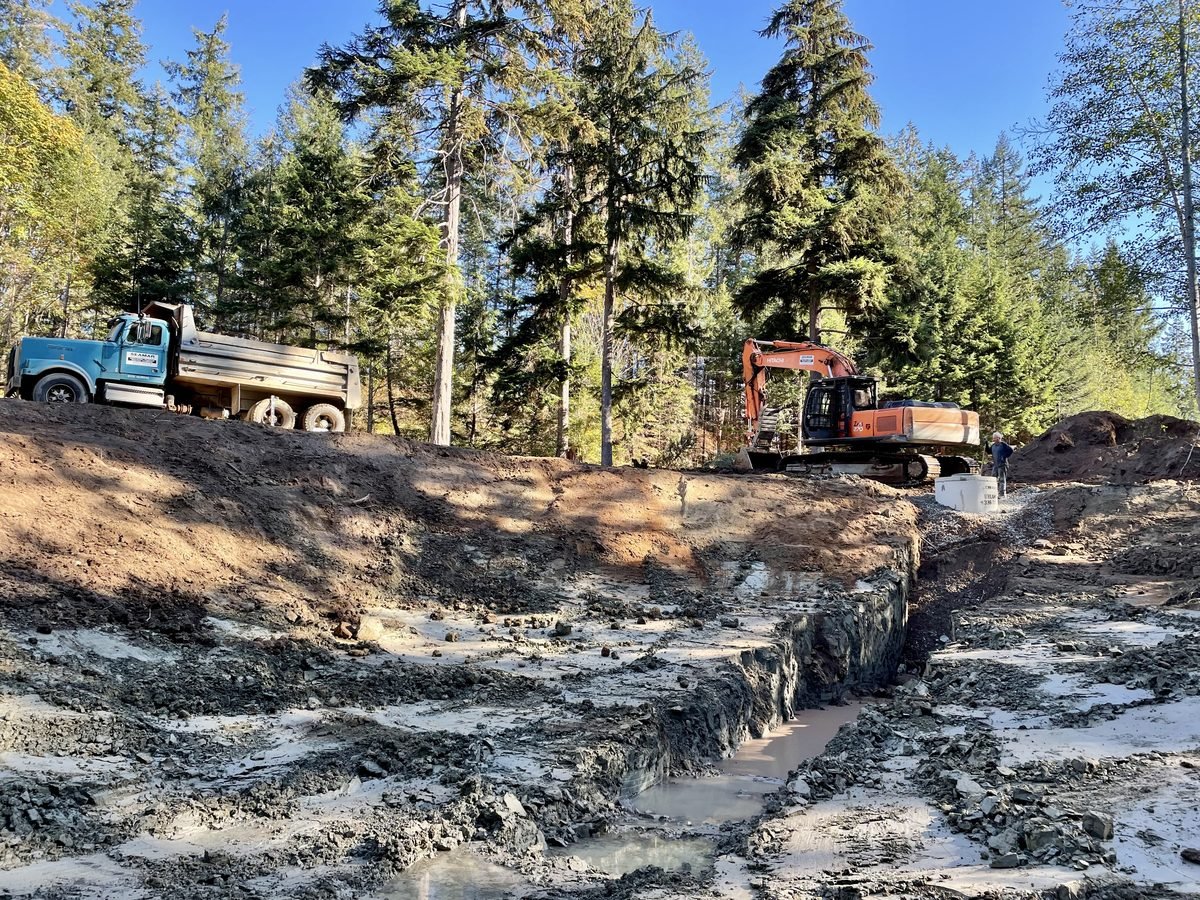
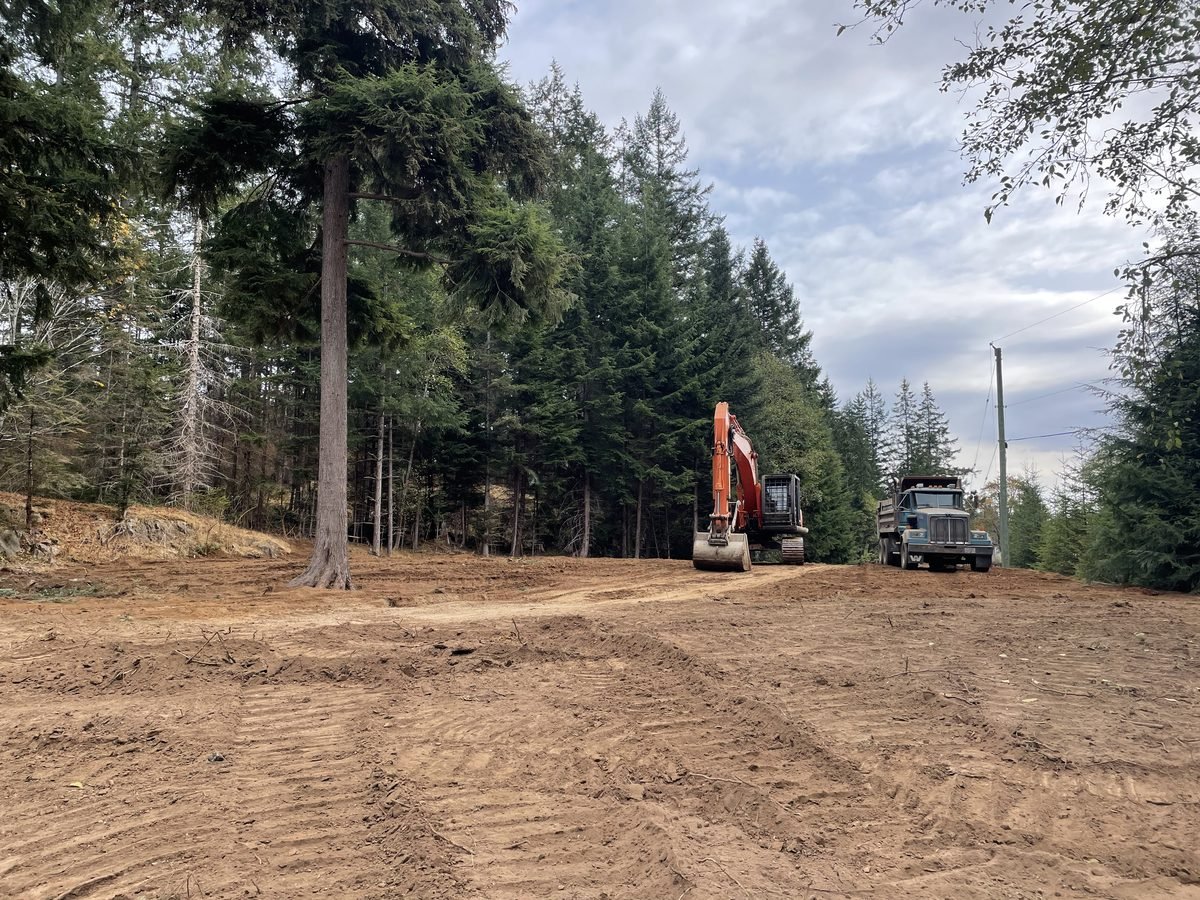
Total stored capacity: approximately 2.8 million litres. Enough for years of household irrigation reserve, multiple fire pumpers, and the kind of drought buffer most coastal BC properties don't have.
What the property has now
Approximately 2.8 million litres of stored water. A multi-year summer irrigation reserve. Fire suppression capacity with a year-round draw point that works even at the lowest pond levels. Gravity-fed irrigation potential. Reshaped contours across the property that direct surface water into the pond. Native coastal grasses locking the banks in place. Reeds and cattails establishing a living filtration layer in the shallows. And every cubic metre of excavated material still on site, doing useful work as part of the landscape.
Specs
| Surface dimensions | 100 × 100 ft at full pool |
| Depth | 18–20 ft |
| Side slopes | 2:1 design |
| Storage capacity | ~2.8 million litres / ~740,000 US gallons / ~615,000 imperial gallons |
| Bottom infrastructure | Keyway with crushed-rock base feeding four concrete well rings |
| Bank plantings | Native coastal grass mix, with reeds and cattails in the shallows for water filtration |
| Excavated material | 100% retained on site, used to shape contours feeding the pond, capped with stripped topsoil |
| Location | Vancouver Island |
| Built by | Swell Farms / Jagged Mountain Excavating |
Download this case study as a PDF
We'll send you the PDF and nothing else. No list, no spam.
Related tools and guides
- Pond & Dam Sizing Calculator -- estimate volume, excavation, and spillway requirements for your property
- Water Capture Calculator -- calculate how much rainwater your property can harvest annually
- Water Budget Planner -- month-by-month supply vs. demand for your water system
- Property Water Map -- interactive map tool with BC data layers for water planning
- Guides & Articles -- more on water systems, permits, and earthworks in BC
References
- Water Sustainability Act (BC) -- governs water diversion, storage, and use in British Columbia
- Dam Safety Regulation (BC) -- applies to dams over 1.8 m wall height or 30,000 m³ storage
- the Province -- provincial intake office for water licence applications (1-877-855-3222)
Reid Graham
Owner / Operator, Swell Farms. 10 years earthworks experience on Vancouver Island. Ponds, water systems, greenhouses, and land shaping. Based in Campbell River, BC.
About Reid →Need a pond on your property?
Swell Farms designs and builds water security ponds across Vancouver Island and the Gulf Islands. Every property has a different water story -- we read the land, design the system, handle the regulations, and run the equipment ourselves. Start with a site visit.
Book a Site Visit →